ROCKWiRED NEW MEXiCO
PROFiLES: LUiS GUERRA
i
FEEL THE EARTH SHAKE!
LUiS GUERRA OF TERREMOTO STUDiO
TALKS
TO ROCKWiRED
ABOUT
HiS STATE-OF-THE-ART RECORDiNG STUDiO
BRiNGiNG
MUSiCAL iDEAS TO LiFE
AND
THE POTENTiAL OF ALBUQUERQUE'S MUSiC SCENE
 iNTERViEWED
BY BRiAN LUSH
iNTERViEWED
BY BRiAN LUSH
Despite
my happiness
since my return to the Southwest after
having spent the better part of a decade in Southern
California, it’s hard to not miss being in such close
proximity to
the music industry. I certainly miss parties at the KEY CLUB, seeing
shows at
the VIPER ROOM or meeting friends in the industry for a burger and a
beer at
the RAINBOW ROOM. Albuquerque New Mexico is
as far away as one
can get from the industry but there is no shortage of musicality. The
talent is
either home-based or passing through and there is a good chance you are
going
to catch something in Albuquerque’s
rocking downtown area at either THE LAUNCHPAD, BURT’S TIKI OUNGE, or
THE EL
REY. Having been away for as log as I have, I felt a little out of step
with
the town that I couldn’t wait to come back to. In stepping out and
getting a
feel for my surroundings and my understanding of the Albuquerque music
scene,
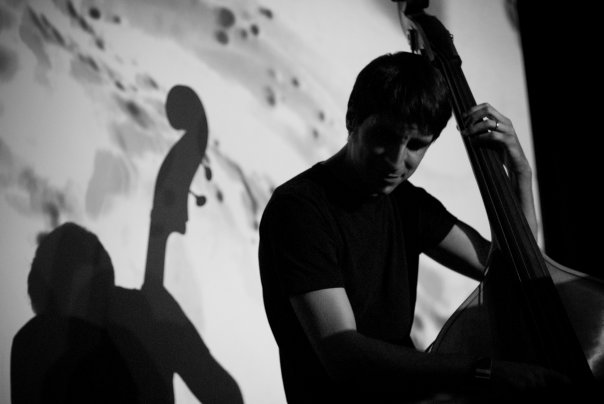
all arrows pointed to one LUIS GUERRA – a multi-instrumentalist
(primarily
focusing on jazz bass), producer and owner of TERREMOTO STUDIOS.
Born and
raised in Texas,
LUIS GUERRA showed musical potential at a very early age. He cut his
teeth on
both the drums and the piano before settling on the bass at age eleven.
His
musical education was intense but before long, he was a musician with a
job by
the time he hit sixteen and ever since has toured and recorded with the
likes
of MARC RIBOT, PETER BUCK (R.E.M.) FELIPE RUIBAL, ALEJANDRO ESCOVEDO
and PATTY
GRIFFIN. GUERRA
made a home for himself
in Albuquerque
eight
years ago. While one would think settling in the Duke City would be
detrimental
to a career in the music business, GUERRA brought the music business to
him
with the establishment of TERREMOTO STUDIOS – an online recording
studio that boasts
cutting edge technology (PRO TOOLS8, REASON 4.0, APOGEE, ABLETON LIVE,
DIGITAL
PERFORMER, LOGIC and NATIVE INSTRUMENTS PLATFORMS) and a roster of
artists from
Albuquerque and around the world. “It’s [TERREMOTO] created an
incredible
environment to be creative.” says GUERRA of his one-of-a-kind recording
studio “Not
just for myself but for other people that have come through the studio.
It’s
small and affordable and it’s been rewarding to see the talent come
through
here and getting to work with people on a very intimate level. It’s a
very
low-key environment where one can produce and be creative. I believe
that if
there is going to be any magic that is going to happen, let it happen.”
ROCKWIRED
spoke LUIS GUERRA over the phone. Here is how it
went.
What
does TERREMOTO
mean?
The word ‘TERREMOTO’ translates directly to ‘earthquake’. It’s
a word that you will hear on the streets of Spain
and parts of Latin America and Central
America
when people are referring to a party. It’s a way of saying ‘we are
going to
have an earthshaking party!’ The idea behind TERREMOTTO STUDIOS is to
make
earthshaking music. It’s about stepping away from the negative meaning
of the
word which implies destruction. Hopefully, the music that gets produced
in the
studio will have some kind of impact.
When
was the studio
set up?
It was set up in Albuquerque
about two years. I’ve always had a studio either in my house or in
other
locations for about nine years. I’ve been working in studios for about
twenty
years professionally, either as a session person, or a producer or an
audio
engineer.
What
motivated the
construction of the studio?
It was basically to have a laboratory - to have a workshop -
to have a space where I could create. That was the purpose. Now, that
original
purpose has evolved into producing other people’s music over the years.
Originally, I had a studio set up in my house so I could record my
ideas and
produce music for myself and for people who were requesting me to
produce music
for them whether it be multimedia or for whatever. TERREMOTO is not
just a
commercial studio but it is a project oriented facility.
What
have been the rewards
of running TERREMOTO?
It’s created an incredible environment to be creative. Not
just for myself but for other people that have come through the studio.
It’s
small and affordable and it’s been rewarding to see the talent come
through
here and getting to work with people on a very intimate level. It’s a
very
low-key environment where one can produce and be creative. I believe
that if
there is going to be any magic that is going to happen, let it happen.
What
drew you to Albuquerque?
Family did. My
wife’s
parents settled and retired here and when my mother-in-law became sick
with
cancer, my wife was commuting here a lot and I was on the road all the
time.
This was about seven or eight years ago and because of the touring, I
had the
flexibility to live wherever. My wife wanted to be by her mom so we
closed down
shop in Austin
and moved here. I toyed with going to Los Angeles at
that time because I was doing some
post-production work there but we decided to stay here for a few months
to see
what would happen and things started rolling. We’ve been here ever
since. We
got a little house, set up shop and that’s it.
What
do you think the
city has to offer musically?
It’s got a diverse pool of talent. It’s got a lot of unknown
talent. It’s a great place for musicians to base themselves out of
because the
cost of living is relatively low. What it lacks is music industry
infrastructure. There is not a whole lot you can do here unless you’ve
got
connections on the outside and that can be very troubling. There is not
a very
large pool of musicians here. It’s not infinite so we run into the
problems of
not being a very populated place. We have a lot of great musicians here
and the
musicians are good but there are just not a lot of them. Overall, I
think it’s a
great place for people to woodshed and develop their ideas and get
their stuff
happening. There are small audiences here and small clubs that support
live
music to some degree and you can present your ideas here and see if
they fly.
What’s
you favorite
venue to listen to live music?
Not sonically speaking, but vibe-wise I like the EL REY. I
go in there and I just think that place has this vibe but it’s not my
favorite
place to listen to music sonically. Between the EL REY and THE OUTPOST,
THE
OUTPOST is probably my favorite place to perform, listen and check out
music
but there is something about the EL REY. There is something about that
place
that you don’t encounter anywhere else. If it is one of the two, I’m
going to
have to pick THE OUTPOST because those are my peeps.
Are
there any local
favorites that stand out for you?
FELIPE RUIBAL AND QUEMOSO are unknown but I definitely think
that they could be presenting music on a much larger stage. I like what
he’s
doing.
How
did music begin
for you?
I was the youngest of four kids and my parents split up when
I was very young. My dad raised us for about ten years or so. He always
said
about me that I beat to my own drum and he meant that literally. He put
me on
the drum set when I was about six or seven. That led me into playing
piano and
then I got into skateboarding for a number of years. I went back to
music when
I was twelve. My dad was multi instrumental. Everyone played an
instrument when
I was growing up. There was music all around. I would go hang out with
my mom and
she was into ballets and classical music and jazz. By the time I was
fifteen, I
was starting to work as a bass player and by the time I was seventeen
or
eighteen, that was what I was doing – being a musician playing clubs
and what
have you. I moved to Austin
and worked out of there for ten years and toured. It was a very natural
thing.
At several points in my life I tried to leave music which is funny. No
matter
how much I may have wanted to leave music, it always kept calling me
back. Opening
up a studio was really a gradual thing for me and to be able to immerse
myself
in production. I just love it! I can’t imagine what else I would be
doing. Now
with the music business changing the way it is, it has gotten trickier
to do
this kind of thing systemically. In hindsight, it might not be the
smartest
thing in the word to be a musician and raise a family, but what are you
going
to do?
You’ve
worked with
numerous music luminaries. Which artist resonated for you the most in
terms of
people that you work with?
I learned a lot from ALEJANDRO ESCOVEDO. My older brother
and I were into skate boarding and punk rock when we were kids but I
also grew
up listening to a ton of music. When I heard punk music, I really
identified
with it. To meet ALEJANDRO ESCOVEDO when I was older and to be able to
play
with him and do recordings with him, it was really great. Four or three
years
ago, I had the opportunity to record with MARC RIBOT who is the guitar
player
for TOM WAITS, CASSANDRA WILSON and T-BONE BURNETT. When I actually got
to make
a record with this guy, that
was
something that I will never forget. The way that guy took punk rock to
a whole
other level with his musicianship and understanding of harmony. He is
such an
accomplished guitar player. For me, it was very fulfilling to be able
to work
with him when I was like thirty-one. In terms of just attitude and
their
commitment to musical styles, working with ALEJANDRO and MARC were two
of the
most rewarding experiences. I would actually have to give you a list of
people
that you’ve never heard of that have influenced me way beyond touring
with
famous people. There are musicians that you probably haven’t heard of
who have
changed my life in terms of music and in how I walk the Earth. Those
are the
true luminaries of my life.
I
understand that you
work extensively with drummer MICHAEL LONGORIA. I also understand the
two of
you are quite the rhythm section. Describe working with him.
Even though we don’t live in the same place he and I come
from very similar backgrounds musically speaking. We both come from
south Texas
and we both grew
up studying music. His mom was a saxophonist. He is hands down, one of
the most
talented drummers that I’ve ever worked with and probably ever will
work with
in this lifetime. He and I have done a lot of producing together. The
idea of
TERREMOTO was something that he and had been bouncing around for years.
He’s an
incredible family man and I just have a lot f respect for him. That
brother has
been through some stuff in his life and he stays true to the ups in
life and
there is no messing around with the way that guy is able to command
that
instrument. It makes my job as a bass player easier.
You’ve
got another
project called RUMBATRONIX.
There isn’t a lot to say about RUMBATRONIX right now. It was
a project that I started with CAMILO QUINONES. It was kind of an
off-shoot of
what me and MICHAEL LONGORIA were doing. RUMBATRONIX was an opportunity
to do
something locally, that had more of a dance music vibe. There isn’t a
lot going
on with RUMBATRONIX . At the moment, I’m focusing on more solo-type
shows and
CAMILO is very busy at the moment as well. Maybe later the year, we
will be
able to book more shows.
What
would you like
to see happen with the music scene in Albuquerque?
I would like to see the music scene in Albuquerque
grow and be able to connect with
what’s going on in the rest of the world so it won’t be so isolated. It
would
be great if something happened here musically that could put Albuquerque
on the map so that people don’t
think that it’s just the desert or the wild, wild, west. I would love
to see
that happen here. How that is going to happen, I don’t know. I would
also like
to see these venues pay the musicians more. I would love to see
musicians not
going out and working for such low wages here. We don’t really have an
active
union other than the one that takes care of NEW MEXICO SYMPHONY
ORCHESTRA. What
I’ve noticed about every other major city is that there is always a
musicians
union that fights for a living wage. It’s very random here in Albuquerque.
I think getting paid a slave wage
really devalues the music. Everyone needs music. I would also love to
see
mentoring going on with the youth here, which is beginning to happen.
We need
to pass this music on to the next generation and give them something to
do. In Albuquerque,
youth have more
opportunities to participate in musical and artistic activities whether
the
city sponsors it or private individuals sponsor it. There is tremendous
potential here that is untapped right now and that lies with the youth.
It
would be great to see that blossom. If we don’t start mentoring the
youth, the
music scene in the city is going to bottom out. It all lies with the
youth.
 BRiAN LUSH (FOUNDER,
EDiTOR-iN-CHiEF)
BRiAN LUSH (FOUNDER,
EDiTOR-iN-CHiEF)
BRIAN
LUSH holds a BA in Creative Writing from the UNIVERSITY OF
NEW MEXICO. He established ROCKWIRED on New Years of 2004 and hasn’t
looked back
since.
From January 2005 to March 2009, LUSH was the host of the weekly
internet radio
show ROCKWIRED LIVE. He produced the program for the AMERICAN RADIO
NETWORK. As
the editor-in-chief for ROCKWiRED MAGAZiNE, LUSH is hands-on when it
comes to
interviewing and building a lasting rapport with the artists that come
ROCKWiRED’s
way. As a youngster, BRIAN LUSH had no idea what kind of seed was being
planted
by reading magazines such as HIT PARADE, HIGH TIMES, SPIN, REQUEST
(remember
that one?) and even ROLLING STONE (but to a significantly lesser
degree).
“Those were the days before the internet and being a rock journalist
looked
like the coolest job imaginable.” says LUSH “But reading these
magazines had me
imagining that one day I’d be the artist giving all of the clever
answers to
some poor guy with a tape recorder. Well, life has a way of surprising
you.
Now, I’m the poor guy with the tape recorder and asking all of the
questions.”
CONTACT BRiAN LUSH
AT: djlush@rockwired.com
|